Why Your Brain Is Hardwired to Love All Things Kawaii
Walk into any Hot Topic, scroll through your For You Page, or peek inside a college dorm room in 2024, and you'll find the same thing: big eyes, soft colors, round shapes, and an overwhelming sense of squee. Kawaii culture — Japan's philosophy of cuteness as a lifestyle — has gone from niche import to full-blown American obsession. But here's the thing: this isn't just a trend. Researchers, cultural critics, and your own nervous system all have something to say about why cute hits so differently.
What Does "Kawaii" Actually Mean?
The word kawaii (可愛い) literally translates to "cute" or "adorable" in Japanese, but that translation barely scratches the surface. In Japan, kawaii is less of an adjective and more of a worldview — a philosophy that finds value, comfort, and even power in softness, innocence, and playfulness. It emerged as a full cultural movement in the 1970s, when Japanese teenagers began writing in rounded, childlike handwriting as a form of subtle rebellion. From there, it exploded into fashion, music, art, and eventually, a global export worth billions.
For American consumers, kawaii arrived in waves: first through Hello Kitty lunch boxes in the '90s, then through anime fandoms in the 2000s, and now through a full-scale aesthetic takeover on platforms like Instagram, TikTok, and Pinterest. Today, it's not unusual to see kawaii influences in everything from Target's stationery aisle to high-end streetwear collabs.
The Science Behind the Squish
So why does seeing a round-faced plushie or a pastel pink notebook make you feel genuinely good? Blame (or thank) your brain.
Konrad Lorenz, an Austrian ethologist, coined the term Kindchenschema — or "baby schema" — back in 1943. His research showed that humans are biologically wired to respond to certain physical features: large heads, big eyes, small noses, chubby cheeks, and rounded bodies. These are the features we associate with infants, and our brains release a cocktail of feel-good chemicals — dopamine included — when we perceive them. Kawaii aesthetics essentially hack this system on purpose.
More recent studies have backed this up in fascinating ways. A 2012 study published in PLOS ONE found that looking at cute images actually improved participants' focus and fine motor performance — suggesting that cuteness doesn't just feel good, it might make you function better. It's no coincidence that kawaii stationery brands have found a massive audience among students and productivity enthusiasts.
Dr. Joshua Dale, a cultural studies professor and co-editor of The Aesthetics and Affects of Cuteness, has noted that kawaii operates on a kind of emotional shortcut. "Cuteness communicates safety and approachability," he's explained in interviews. "In a world that feels increasingly chaotic, there's something deeply soothing about surrounding yourself with things that signal gentleness."
Millennials, Gen Z, and the Comfort Economy
That idea of soothing chaos hits especially hard when you look at who is driving the kawaii boom in the US. Millennials and Gen Z consumers — two generations that have navigated economic instability, a pandemic, climate anxiety, and relentless digital overstimulation — are the core audience. And both groups are spending real money on it.
According to market research firm Grand View Research, the global kawaii market was valued at over $76 billion in 2023, with North American demand growing faster than almost any other region. Blind box collectibles, character plushies, and kawaii-branded tech accessories are among the fastest-growing subcategories.
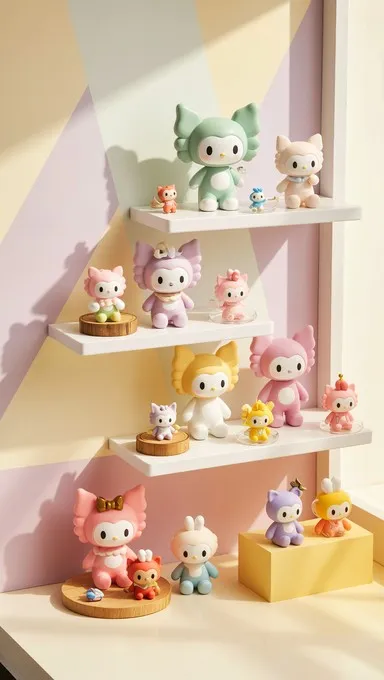
Social media has acted as a rocket fuel. The hashtag #kawaii has over 60 million posts on Instagram alone. On TikTok, "kawaii haul" videos routinely rack up millions of views, with creators unboxing everything from Japanese stationery sets to limited-edition Sonny Angel figurines. The visual language of kawaii — soft lighting, pastel backdrops, carefully arranged "shelfies" — is practically its own content genre.
What's particularly interesting is the willingness to spend premium prices. A Labubu vinyl figure from Pop Mart can run $20-$80 depending on the series, and rare versions resell for hundreds. Jellycat plushies — British-made but deeply kawaii in aesthetic — regularly sell out at $30-$60 a pop. Consumers aren't just buying objects; they're buying emotional experiences.
Kawaii as Self-Expression and Resistance
Here's where it gets really interesting: for many American fans, kawaii isn't just about feeling cozy. It's also a form of identity and, sometimes, quiet defiance.
In a culture that often associates maturity with minimalism, seriousness, and productivity, choosing to decorate your desk with a Cinnamoroll plushie or wear a Harajuku-inspired outfit to work is a small but deliberate act of self-definition. It says: I get to decide what joy looks like for me.
This is especially true within LGBTQ+ communities, neurodivergent communities, and mental health advocacy spaces, where kawaii aesthetics have found particularly enthusiastic homes. The softness and non-threatening nature of cute imagery creates spaces that feel safe and affirming. Many kawaii fans openly describe their collections as part of their mental wellness toolkit — physical anchors to comfort and playfulness during hard times.
From Harajuku to Hollywood: Kawaii Goes Mainstream
The crossover into mainstream American culture is now undeniable. Brands like Coach, Crocs, and even luxury players like Gucci have collaborated with Japanese kawaii IPs. Billie Eilish, Cardi B, and Blackpink's Lisa have all publicly embraced kawaii aesthetics. Sanrio's character licensing revenue continues to climb year after year, with Hello Kitty alone generating an estimated $80 billion in retail sales since her debut.
Tech companies have also taken note. Apple's emoji set leans heavily kawaii. Duolingo's mascot Duo the owl is a textbook example of baby schema design. Even car manufacturers like Mini and Fiat have leaned into rounded, approachable silhouettes that align with cute-object psychology.
Wellness brands are in on it too. Kawaii-influenced packaging — think pastel supplements, illustrated skincare products, and plushie-shaped diffusers — has exploded on platforms like Ulta and Amazon. The message is clear: cuteness sells, and it sells premium.
The Takeaway
Kawaii isn't a passing fad, and it's definitely not "just for kids." It's a sophisticated cultural force that taps into deep psychological needs — for comfort, for beauty, for self-expression, and for joy that isn't contingent on being productive or serious. In a world with a lot of sharp edges, there's something genuinely radical about choosing softness.
And honestly? Your brain was always going to end up here. It was just waiting for the right plushie.