Plushies, Profits, and Pokémon Cards: Why Gen Z Is Treating Kawaii Collectibles Like a Portfolio
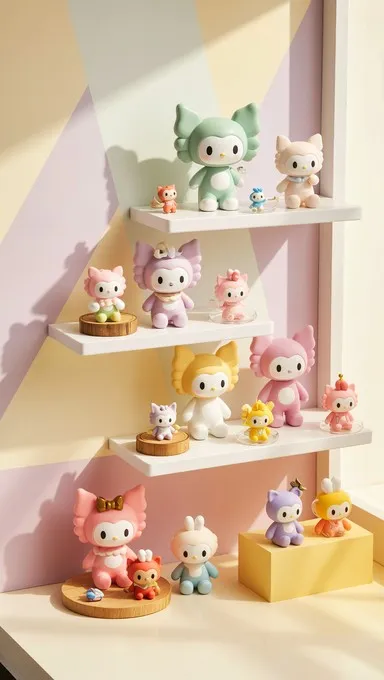
Photo: kawaii plush toys collectibles display shelf colorful, via i.ytimg.com
There's a corner of the internet where people talk about plushies the same way others talk about index funds. Price tracking spreadsheets, buy-low-sell-high strategies, Discord servers buzzing with restocking alerts — it sounds like Wall Street, except everyone's avatar is a pastel frog and the commodity in question is a limited-edition Squishmallow.
Welcome to the kawaii economy, where cute is currency and the resale market is very, very real.
From Toy Aisle to Trading Floor
It didn't happen overnight. The collectible toy market has been building momentum for years, but something shifted hard around 2020 and 2021. Stuck at home, scrolling endlessly, a whole generation of Americans rediscovered the comfort of cute — and quickly realized that comfort had a price tag that kept climbing.
Squishmallows became the poster child for this shift. Kellytoy's squishy, marshmallow-soft characters started as a Target impulse buy. Then certain styles went discontinued. Then TikTok happened. Suddenly, a $14.99 plush of a tie-dye axolotl named Archie was listing on eBay for $85. Some rare holiday editions broke the $200 mark. Collectors who'd bought multiples "just because they were cute" found themselves sitting on genuine profit.
That experience — stumbling into a return on a stuffed animal — planted a seed. If a plushie could flip for 6x retail, what else in the kawaii space was undervalued?
The Anatomy of a Kawaii Investment
Not every cute thing appreciates. The collectors who are actually making money understand a few key variables that separate a smart buy from a shelf warmer.
Scarcity is everything. Limited-edition drops, convention exclusives, regional releases, and collab items with short production runs are the ones that move. A standard Pikachu plush has infinite supply. A Pikachu designed by a specific artist for a single convention weekend? That's a different conversation.
Brand heat matters. Sanrio characters, Pokémon, Ghibli figures, and designer toy brands like Medicom or Funko's higher-end lines carry built-in demand. But savvy collectors are also watching smaller indie Japanese brands that haven't fully broken into the US market yet — buying early before American demand catches up to Japanese hype.
Condition and packaging are non-negotiable. The resale market is ruthless about this. A Squishmallow with a torn tag loses significant value. Original packaging on a designer vinyl figure can be the difference between $40 and $140. Serious collectors treat storage like a museum curator would.
Community sentiment drives price. This is where kawaii collecting starts to feel genuinely stock-market-adjacent. Prices on platforms like StockX (which now carries some collectibles), Mercari, and eBay fluctuate based on what's trending in collector communities. A single viral TikTok can spike demand for a previously overlooked character overnight.
Real People, Real Returns
Take Maya, a 24-year-old from Austin who started buying Squishmallows during the pandemic. She wasn't thinking about resale at first — she just liked them. But when she noticed a Halloween squad pack she'd bought for $34 was selling for $110 on Mercari, she got strategic.
"I started treating drops like sneaker releases," she says. "I'd research which characters were getting discontinued, set alarms for restocks, and buy two of anything that seemed limited. One to keep, one to eventually sell." Over two years, she estimates she's cleared around $1,200 in profit — not life-changing money, but enough to fund her next round of collecting entirely.
Then there's the higher-stakes world of designer art toys. Figures from brands like KAWS, Be@rbrick, and Instinctoy — many of which carry strong kawaii and Japanese street art DNA — have developed serious secondary markets. A 400% Be@rbrick that retailed for $150 can resell for $400 to $600 depending on the colorway and collaboration partner. Certain grail pieces have sold at auction for thousands.
These aren't flukes. They're the result of a market that now has enough infrastructure — price tracking sites, dedicated resale platforms, collector insurance options — to function like a legitimate asset class.
The NFT Detour and What It Taught Us
It's worth acknowledging the NFT moment, because kawaii culture got pulled into that wave too. Several Japanese character brands and indie kawaii artists launched NFT collections around 2021-2022, promising digital ownership of cute characters with real-world utility. Some early buyers made money. Many more didn't.
What the NFT era actually did, though, was introduce a generation of kawaii fans to the concept of speculative collecting — the idea that the things you love could also be financial instruments. Even as NFT valuations collapsed, the underlying behavior stuck. People kept the spreadsheets. They just pointed them back at physical goods.
Physical kawaii collectibles, it turns out, have something NFTs largely didn't: tangible emotional value. You can hug a Squishmallow. You can display a Be@rbrick on your shelf. The object itself provides ongoing utility and joy regardless of what the market does, which makes holding through a price dip a lot more psychologically manageable.
Is This Actually Smart Investing?
Here's where we keep it real, because Kawaii Haven is not a financial advice column.
Treating collectibles as a primary investment strategy is risky. Markets are fickle. What's hot today can cool fast. Storage, shipping, and platform fees eat into margins. And unlike stocks, collectibles aren't liquid — you can't sell a Squishmallow in three seconds if you need cash.
But as a supplemental strategy — particularly for people who are already buying kawaii goods and simply want to be more intentional about which items they acquire — the math can genuinely work out. The key is buying what you actually love. If a limited plush never sells, you still have something that makes you happy every time you look at it. That's a floor that no stock can offer.
The collectors who are thriving in this space aren't gambling their savings on plushies. They're fans first who learned to pay attention. They understand their niche deeply, they buy smart, and they hold patiently. That's not so different from how good investors operate in any market.
The Bigger Picture
What's really happening here is a values shift. Gen Z grew up watching housing markets price them out, watching traditional financial advice fail to account for their reality, and watching sneakerheads and sports card collectors build real wealth through passion-based investing. Kawaii collectibles fit neatly into that same framework — with the added bonus of being genuinely joyful to own.
When a 22-year-old says she's "investing in plushies," she's not being naive. She's applying the same logic as any collector market, just wrapped in pastel and sparkles.
And honestly? There are worse places to put your money than something that makes you smile every morning.