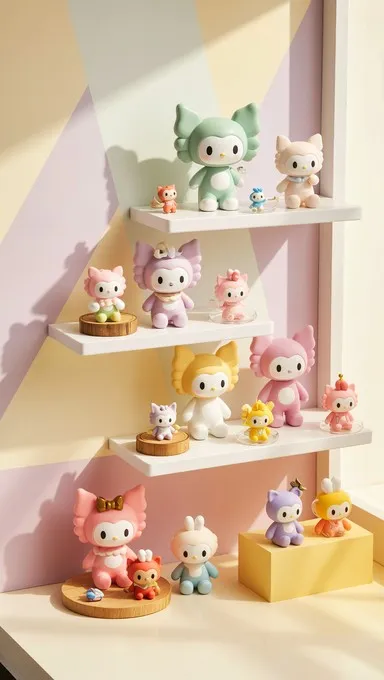
Sanrio, Ghibli, or Pokémon: A Collector's Honest Guide to Picking Your Kawaii Universe
So you've decided you want to start collecting kawaii merchandise. Amazing. Welcome to one of the most genuinely joyful rabbit holes the internet has to offer. There's just one problem: the moment you start browsing, you're immediately confronted with a universe-sized question. Do you go Sanrio? Studio Ghibli? Pokémon? All three? (Spoiler: "all three" is a valid answer, but your bank account may disagree.)
For newcomers especially, the sheer volume of options across these three franchises can feel paralyzing. Each one has decades of history, thousands of products, dedicated fan communities, and its own distinct aesthetic identity. Picking one — or knowing which to prioritize — makes a real difference in how you build your collection, how much you spend, and how much joy you get out of it long-term.
This guide breaks it all down, honestly and without hype, so you can make a call that actually fits your personality and your life.
First, a Quick Vibe Check
Before we get into the details, here's the shorthand version:
- Sanrio is for the person who wants to live inside a pastel dream. It's character-driven, deeply cute, and built around emotional connection to specific mascots.
- Studio Ghibli is for the person who wants to collect with a sense of artistry and nostalgia. It skews more toward display-worthy pieces and has a slightly more "elevated" aesthetic.
- Pokémon is for the person who wants to collect competitively — there's a game within the collecting game, and it can be as casual or as intense as you want it to be.
None of these is objectively better. They just scratch different itches.
Sanrio: The OG Kawaii Kingdom
The history: Sanrio has been doing kawaii since 1960. Hello Kitty debuted in 1974 and became one of the most recognizable characters on the planet. Since then, the brand has expanded into dozens of characters — Cinnamoroll, My Melody, Pompompurin, Kuromi, Little Twin Stars — each with their own distinct personality and fanbase.
The aesthetic: Pure, unapologetic cute. Pastels, rounded shapes, soft expressions, and an overwhelming sense of sweetness. Sanrio products tend to lean heavily into everyday usability — plushies, stationery, bags, accessories, home goods. This is kawaii you can actually use.
Product availability in the US: Better than ever. Sanrio has official US retail locations (especially in California), a strong presence at Hot Topic and Target, and a robust online store. Japanese imports are widely available through retailers like Japan LA, Kinokuniya, and various Etsy sellers.
Budget reality: Sanrio is one of the most accessible entry points in terms of price. You can pick up a quality plush for $15–$30, a stationery set for under $20, or a character mug for around $25. High-end collaborations and limited edition drops can push prices higher, but the baseline is very approachable.
Resale value: Variable. Standard Sanrio merchandise doesn't hold huge resale value, but limited collabs (think Sanrio x streetwear brands or exclusive Sanrio Puroland items) can fetch multiples of retail on the secondary market.
Community vibe: Warm, welcoming, and very online. Sanrio fans are passionate about their specific character allegiances (the "Sanrio Character Ranking" vote is a whole cultural event). It's a community that runs on enthusiasm and aesthetic appreciation rather than financial competition.
Best for: People who want to surround themselves with cute things they'll actually interact with daily. Also great for those who love character-driven emotional connection.
Studio Ghibli: The Collector's Collector Choice
The history: Studio Ghibli was founded in 1985 by Hayao Miyazaki and Isao Takahata, and it has produced some of the most beloved animated films in history — My Neighbor Totoro, Spirited Away, Princess Mononoke, Howl's Moving Castle, and more. The merchandise universe is built entirely around these films and their characters.
The aesthetic: Ghibli merch sits at the intersection of kawaii and fine art. It's still cute — Totoro is undeniably adorable — but there's a depth and craftsmanship to Ghibli products that sets them apart. Many pieces feel display-worthy in a way that Sanrio and Pokémon items don't always.
Product availability in the US: This is where Ghibli gets tricky. Official US distribution has historically been limited, though it's improving. GKIDS (the US distributor for Ghibli films) has expanded merchandise efforts, and stores like Kinokuniya carry official imports. However, a lot of the best Ghibli merchandise — especially from the Ghibli Museum in Mitaka, Japan — remains Japan-exclusive, which means import fees and waitlists.
Budget reality: Mid-to-high range. A quality Ghibli figure can run $40–$150+. Plushies tend to sit in the $25–$60 range. The premium feel of Ghibli products generally comes with a premium price tag.
Resale value: Strong, particularly for limited and museum-exclusive pieces. Ghibli merchandise tends to hold value well over time, and rare items appreciate meaningfully.
Community vibe: Thoughtful and artistic. Ghibli collectors tend to care a lot about the films themselves — this is a fandom rooted in cinema appreciation as much as merchandise enthusiasm. The community is passionate but less frenzied than the Pokémon collecting world.
Best for: People who want a curated, display-focused collection with artistic integrity. Also ideal for those who already have a deep love for specific Ghibli films.
Pokémon: The Collecting Game Within the Game
The history: Pokémon launched in 1996 and has never really stopped growing. With over 1,000 species and a multimedia empire spanning games, anime, cards, and merchandise, it's the highest-grossing media franchise in history. The collecting dimension is baked into its DNA — "Gotta Catch 'Em All" isn't just a tagline, it's a philosophy.
The aesthetic: Pokémon merch ranges from extremely cute (Eevee plushies, Pikachu everything) to surprisingly sophisticated (high-end art prints, premium figure lines). It's more visually diverse than Sanrio or Ghibli, which means there's something for almost every aesthetic preference — but also means quality varies wildly.
Product availability in the US: Excellent. Pokémon Center has a robust US online store and physical locations. Target, Walmart, GameStop, and countless other retailers carry Pokémon products. This is the most accessible of the three franchises for US-based collectors.
Budget reality: The widest range of the three. You can spend $5 on a booster pack or $500+ on a graded first-edition card. Plushies run $15–$40, standard figures $20–$80, and the card collecting side can go essentially as deep as you're willing to go.
Resale value: The highest ceiling of the three, but also the most volatile. First-edition and rare holographic cards can be worth thousands. Modern cards have more unpredictable value. Figures and plushies generally don't appreciate as dramatically unless they're limited runs.
Community vibe: Huge, diverse, and competitive. The Pokémon collecting community encompasses casual fans, competitive card players, and serious investors. It can feel overwhelming at first, but there are welcoming corners of the fandom for every level of commitment.
Best for: People who love the idea of collecting as a pursuit — hunting for specific pieces, understanding market value, and engaging with a massive global community. Also great if you already love the games or the anime.
So, Which One Is Actually Right for You?
Here's the honest answer: it depends entirely on what you want collecting to feel like.
If you want collecting to feel cozy and personal — like building a little world of characters you love — Sanrio is your universe.
If you want collecting to feel like curation — like assembling a gallery of meaningful, beautiful objects — Studio Ghibli is your universe.
If you want collecting to feel like a game — with strategy, discovery, and the thrill of the hunt — Pokémon is your universe.
And if you want all three? Start with one, get a feel for the rhythms of collecting, and expand from there. Your kawaii journey doesn't have to fit in a single box — and honestly, the most interesting collections rarely do.