Your Brain on Cute: The Real Science Behind Why Kawaii Makes You Feel Better
You've probably felt it before. You're having a rough day — deadlines stacking up, inbox overflowing, general life chaos doing its thing — and then you glance over at the little Cinnamoroll figure on your desk and something in your chest just... loosens. It sounds small. It is small. But that tiny moment of relief is real, and science has been quietly building a case for why it happens.
Kawaii isn't just a visual style. It's a psychological experience. And the more researchers dig into it, the more interesting it gets.
The Dopamine Connection
Let's start with the brain chemistry piece, because it's genuinely wild. When you look at something you perceive as cute — rounded shapes, large eyes, soft colors, small proportions — your brain responds with a measurable release of dopamine and oxytocin. These are the same neurochemicals associated with pleasure, social bonding, and reward. Your nervous system, in other words, treats a well-designed plushie with some of the same warmth it reserves for puppies and babies.
This isn't a coincidence. Researchers believe it's rooted in what ethologist Konrad Lorenz called the Kindchenschema, or "baby schema" — a set of physical features (big eyes, round face, small nose) that trigger caregiving instincts in humans. Character designers in Japan figured this out intuitively decades ago, and it's a huge part of why Sanrio's characters have barely changed their core design language since the 1970s. Those proportions work on a neurological level.
Kawaii and Attention: The Focus Effect
Here's one of the more surprising findings in kawaii research: a 2012 study out of Hiroshima University found that participants performed tasks requiring careful attention better after viewing images of cute baby animals. The researchers proposed that the positive affect triggered by cute imagery narrows focus and encourages more deliberate, careful behavior.
For kawaii fans who keep character goods on their desks, this is basically scientific validation of what you already knew. That Pompompurin pencil holder isn't a distraction — it might actually be helping you concentrate.
Soft Colors and the Nervous System
Beyond character design, the color palette associated with kawaii aesthetics has its own psychological profile. Pastels — the blush pinks, mint greens, lavenders, and creamy whites that dominate kawaii design — are consistently associated with lower arousal states in color psychology research. They don't overstimulate. They don't demand attention the way saturated, high-contrast colors do.
For people managing anxiety, this matters more than it might seem. Environments dominated by harsh lighting, aggressive color contrasts, and visual noise (basically: most open-plan offices and social media feeds) keep the nervous system in a mild but constant state of alert. Introducing soft, rounded, pastel-dominated visual elements into your space is a low-effort way to dial that baseline tension down.
This is part of why so many people in the mental health and wellness community have started talking about intentional environment design — curating what you look at as a form of self-care. Kawaii collectors have been doing this for years without the clinical vocabulary for it.
When Cute Becomes a Coping Tool
It's worth being honest here: kawaii aesthetics aren't a treatment for clinical depression or anxiety disorders, and we're not suggesting they are. But as a complementary tool — something that sits alongside therapy, medication, community support, and other strategies — the research genuinely supports their value.
Several therapists who work with young adults have noted that clients who maintain aesthetically intentional spaces (including kawaii-styled rooms and desks) often report stronger feelings of personal agency and comfort at home. The act of curating a space with items that bring you joy isn't trivial. It's a form of environmental self-advocacy — telling your nervous system, deliberately, that this space is safe and pleasant.
Building Your Own Kawaii Wellness Practice
If you want to be more intentional about using kawaii aesthetics for your mental wellbeing, here are a few practical starting points:
Create a visual anchor. Pick one or two items — a plushie, a figure, a piece of art — and place them somewhere you look frequently. The goal is a reliable, low-effort dopamine hit that doesn't require screen time.
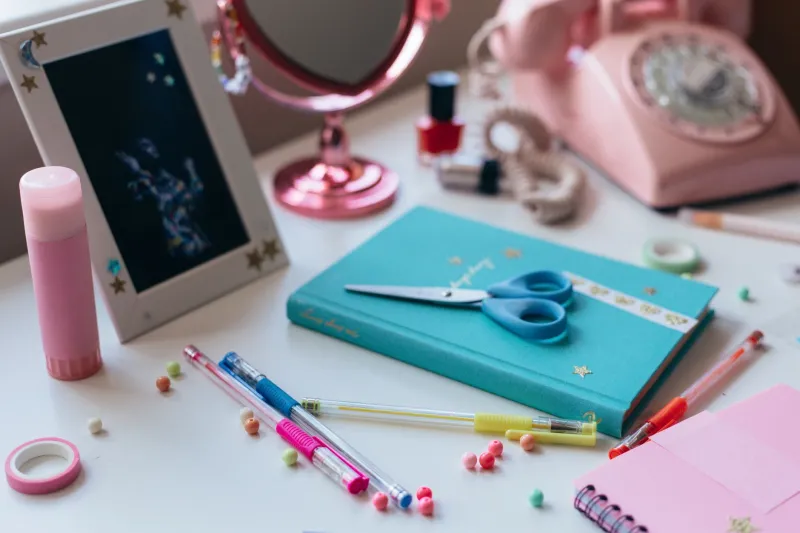
Go analog with your stationery. Kawaii planners, sticker sets, and notebooks encourage the kind of slow, tactile engagement that's genuinely calming for anxious brains. There's a reason bullet journaling took off the way it did — the physical act of writing, especially with pretty tools, activates a different kind of attention than scrolling.
Use color deliberately. If you can control any part of your environment — even just a corner of a desk or a shelf — consider leaning into a soft, cohesive color palette. It doesn't have to be maximalist. Even a few pastel elements can shift the visual tone of a space.
Engage with kawaii community. This one's underrated. The social dimension of kawaii culture — sharing finds, celebrating collections, connecting over shared love of a character — provides genuine belonging. Loneliness is one of the biggest drivers of anxiety and depression in American adults right now, and fandom communities, including kawaii spaces, offer real antidotes to that.
Cute as a Form of Resistance
There's also something worth naming that goes beyond the neuroscience. In a cultural moment that often rewards cynicism, hustle, and emotional toughness, choosing to surround yourself with soft and joyful things is quietly subversive. It's a refusal to accept that adulthood has to be gray and grim.
Kawaii culture, at its core, has always been about that refusal. And it turns out your brain agrees.